Learn how to organize your art supplies with simple, budget-friendly ideas — from clear bins and tin cans to shelf zones. A creative space you’ll actually love!
If you love to create, you already know the beautiful chaos that comes with it. I paint, I sketch, I craft — and for the longest time, I had art supplies scattered across practically every surface in my home. Brushes on the dining table, a water cup on the kitchen countertop, and pencils hidden in corners. Sound familiar? I’d reach for my favourite fine liner and spend fifteen minutes hunting for it before I even started creating. Honestly, it was exhausting.
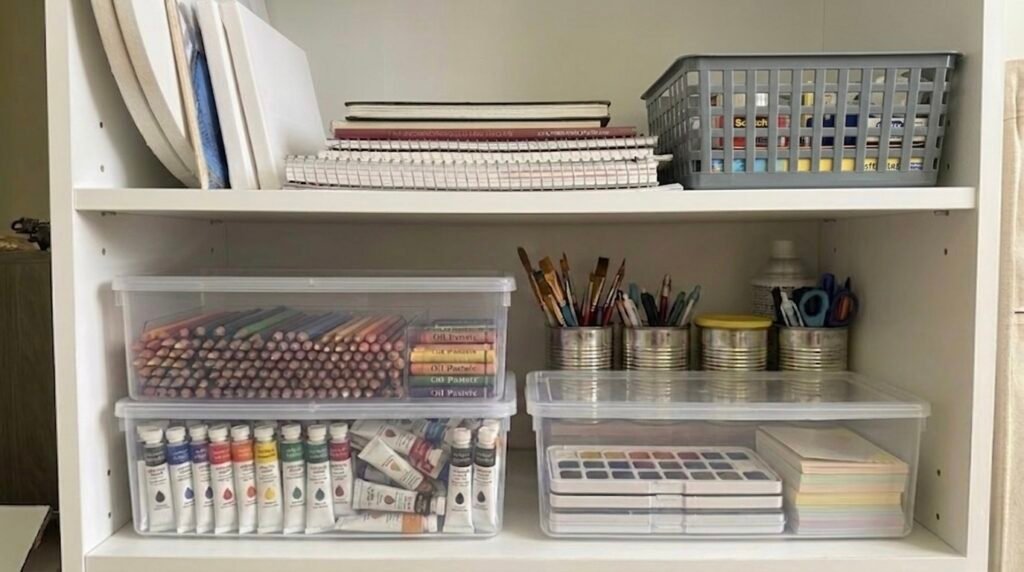
That’s when I decided enough was enough. I carved out a dedicated section on my bookshelf — just for my art supplies — and completely transformed how I work and create. And let me tell you: once everything has a home, the creative process feels so much lighter and more joyful. If you’ve been putting off getting your creative corner in order, this guide on how to organize your art supplies is going to be your new best friend.
Whether you’re working with a single drawer, a floating shelf, or a full dedicated desk, these tips will help you build a system that actually sticks — and looks gorgeous while doing it.
Let’s dive in!
This post contains affiliate links. As an Amazon Associate, I earn from qualifying purchases.
For more information, see my disclosures here.
TIP 01: Use Clear Bins with Lids for Your Paints
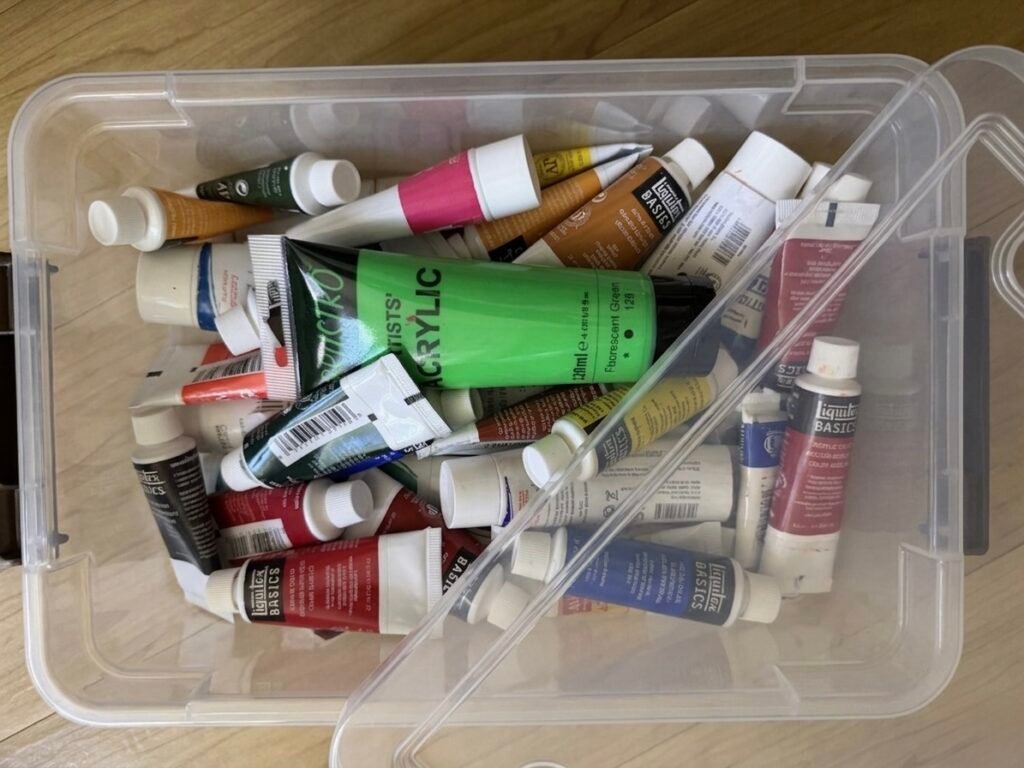
This is hands-down the game-changer I didn’t know I needed. Switching to Clear Storage Bins with Lids for my paints meant I could see exactly what I had at a glance — no more digging through a jumbled pile of tubes trying to find Burnt Sienna. Clear bins let you spot low supplies instantly, keep your paints protected from dust, and make the whole shelf look clean and intentional rather than chaotic.
I use separate bins for different paint types — one for acrylics, one for watercolours, and one for gouache. Stack them neatly and suddenly your shelf goes from cluttered to curated. You can even label the front of each bin for that extra touch of organisation.
TIP 02: Group Like Supplies Together — Always
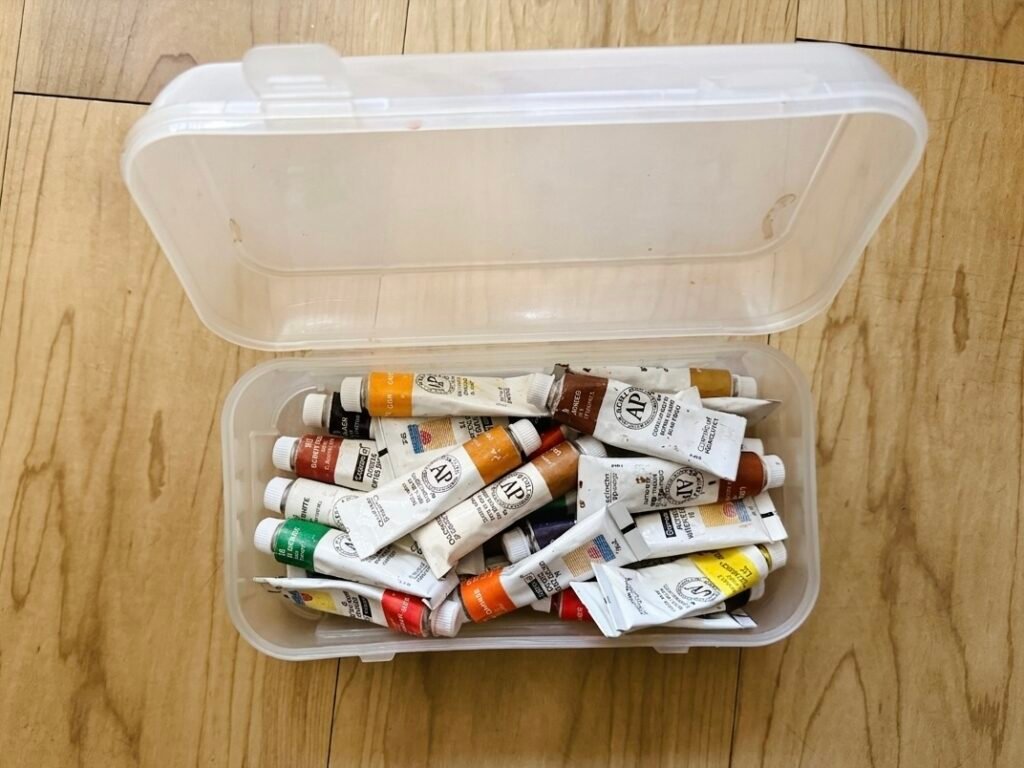
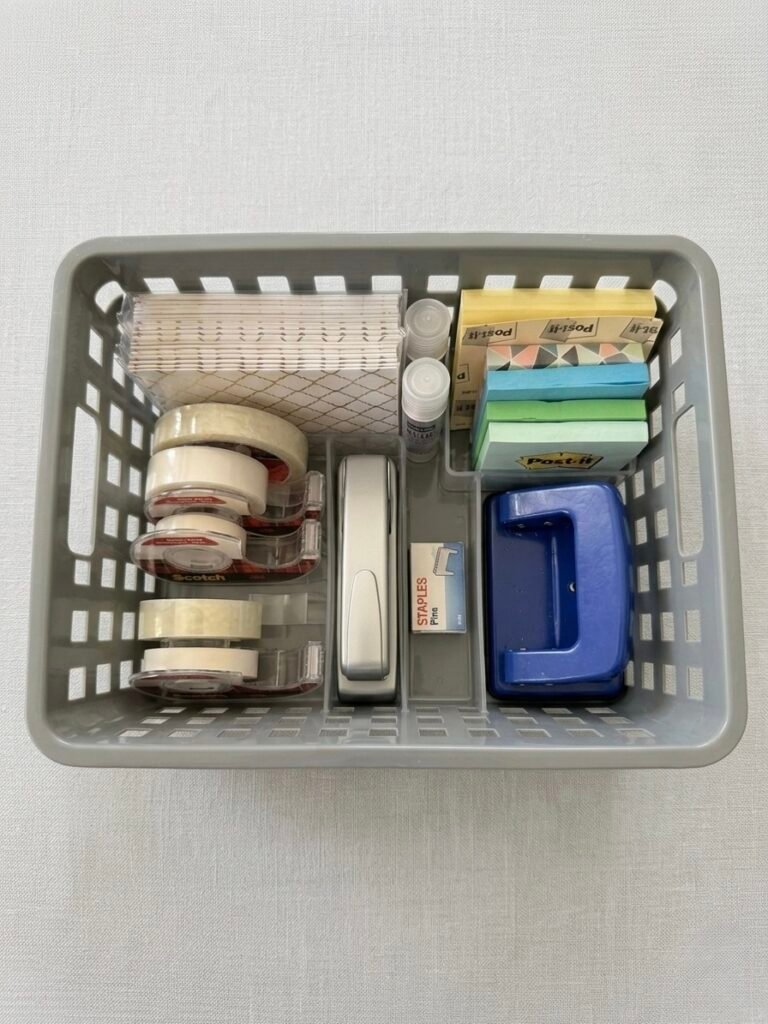
Here’s a rule I live by: keep what belongs together, together. That means your scissors, tape, rulers, and cutting tools all live in the same zone. Your papers, sketchbooks, and cardstock all stack in one spot. Your stickers, washi tape, and embellishments are all in one small box.
When you create dedicated “supply families,” you stop the exhausting cycle of searching. You’ll naturally reach for the right area every time, and putting things back becomes second nature. Think of it like how a professional studio is laid out — everything serves a purpose and everything is grouped by function.
A great way to make this work on a shelf is to use small trays or Plastic Storage Baskets to keep each group contained. I use a flat tray for my cutting tools and a small basket for my tapes and adhesives. It looks so tidy, and it saves me so much time!
TIP 03: Reuse Tin Cans as Paintbrush & Tool Holders
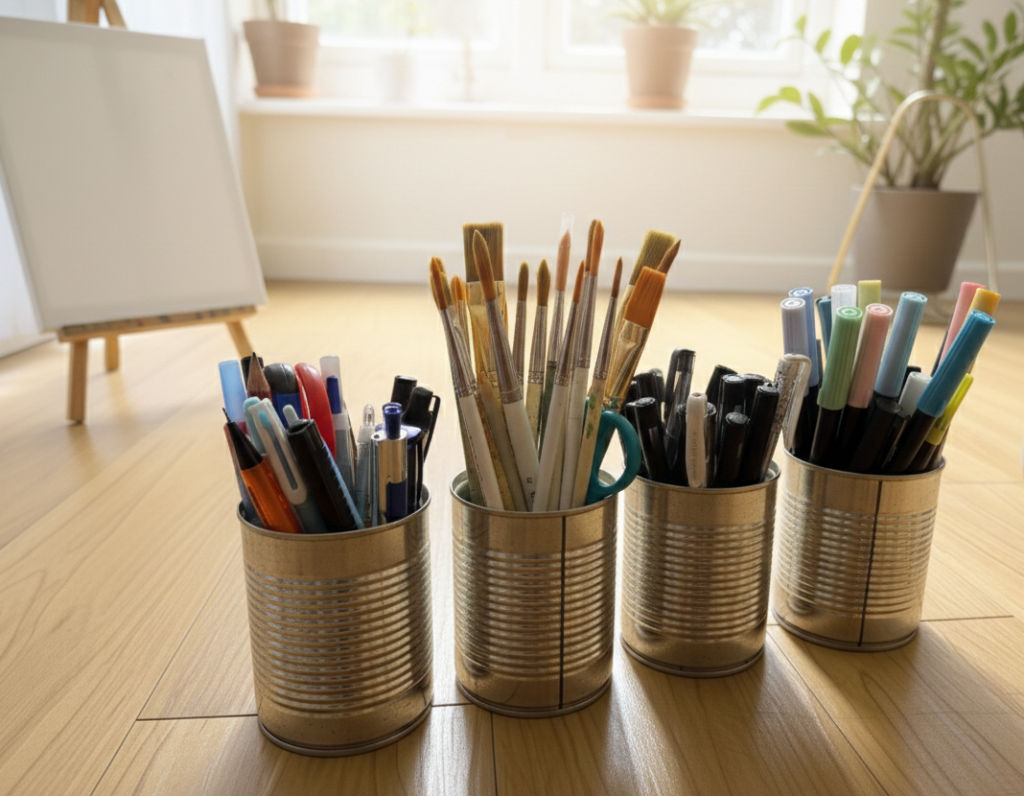
This is one of my absolute favourite upcycling tricks, and it costs you nothing! Save your old tin cans — from canned tomatoes, chickpeas, whatever — give them a good wash, and you’ve instantly got the most charming little holders for your paintbrushes, pencils, scissors, and even your water cup while painting.
You can leave them plain for an industrial-chic look, or wrap them in twine, paint them with chalk paint, or stick on some washi tape to match your shelf’s colour palette. I have a little row of three tins on my shelf — one for brushes sorted by size, one for pencils and pens, and one holding my scissors and palette knives. It’s one of those small things that makes me genuinely smile every time I sit down to create.
“The best organisation tools are often the ones you already own — you just need to see them differently.”
If you want to elevate the look a little, try wrapping the cans in kraft paper and adding handwritten labels. Instant Pinterest-worthy craft corner!
TIP 04: Label Everything (Yes, Everything!)
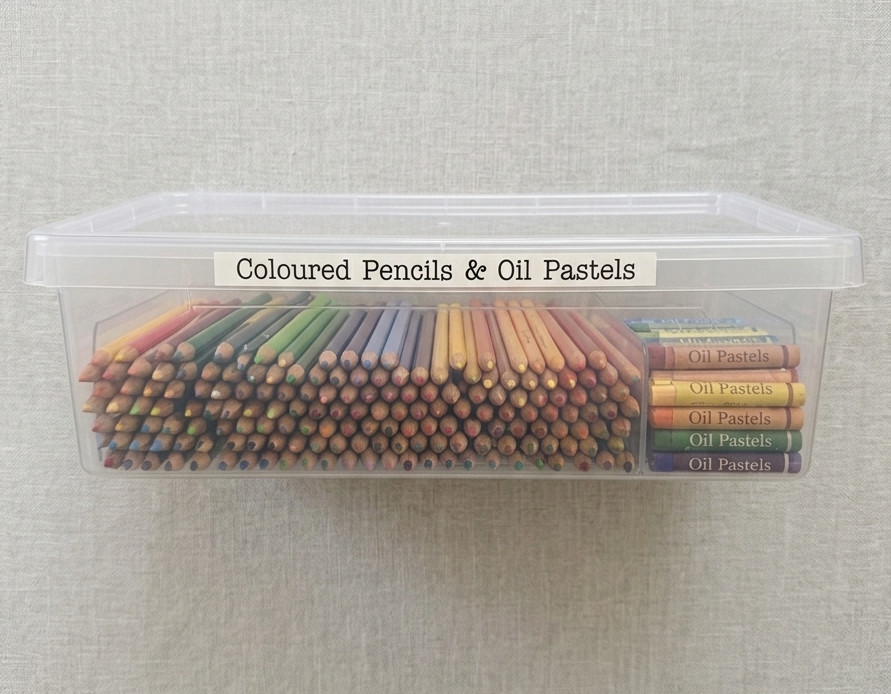
Labelling is the secret weapon of any well-organised space. When every bin, basket, and container has a label, putting things back in the right place becomes effortless — not just for you, but for anyone else who uses the space too. It also makes restocking supplies so much easier because you can see at a glance what’s running low.
You don’t need to invest in a fancy label maker right away — a fine-tip marker and some masking tape do the trick beautifully. But if you do want to level up, a Handheld Label Maker creates those satisfying, professional-looking labels that make the whole shelf feel cohesive and intentional.
TIP 05: Store Paper and Sketchbooks Vertically
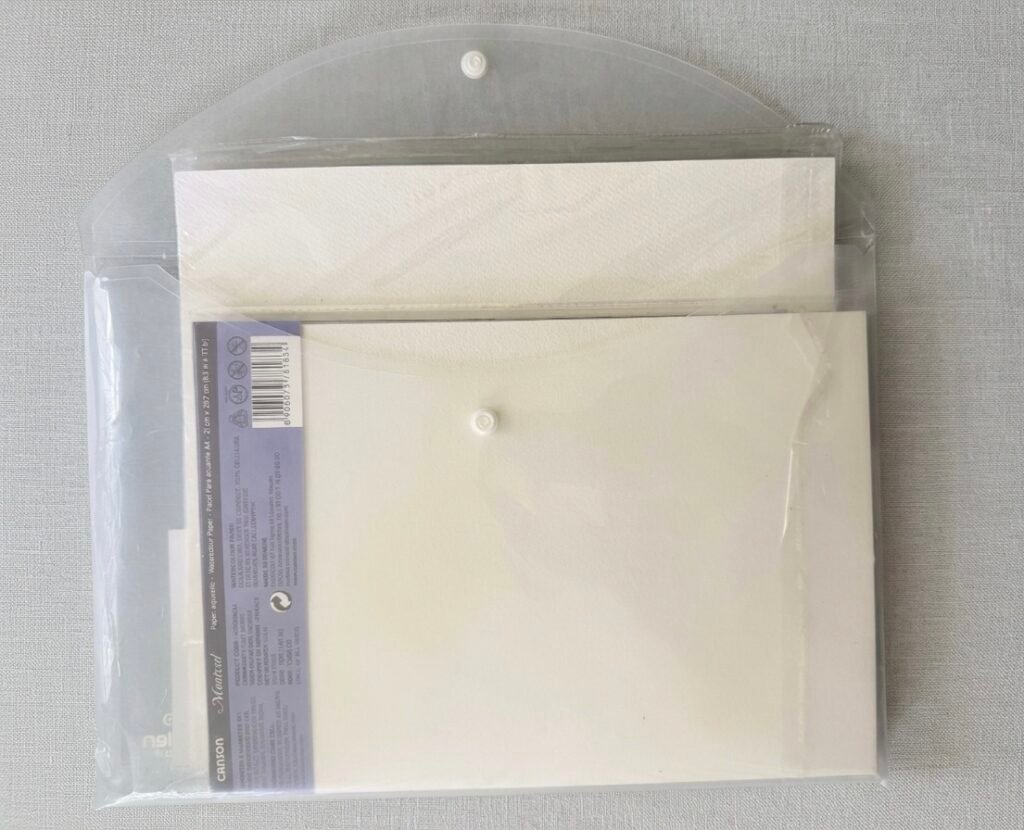
One of the biggest mistakes people make with art supply organisation is stacking papers and sketchbooks in flat horizontal piles. The problem? You always need the one at the very bottom. Instead, try storing them vertically — standing up like books on a shelf — using a simple magazine file or a book stand.
This way, you can flip through and pull out exactly what you need without disturbing anything else. I use Folder Organizers for loose watercolour paper, sketch paper, and cardstock, and they sit beautifully in a row on my shelf. It’s functional, and it genuinely looks beautiful.
TIP 06: Use a Rotating Caddy for Your Most-Used Supplies
If you reach for certain supplies all the time — your go-to brushes, everyday pencils, a glue stick, your favourite washi tape — a Rotating Desk Caddy is going to change your life. These spinning organisers let you access all sides with a simple turn, so nothing gets buried in the back.
Place it at the front of your shelf or right on your work surface, and fill it with your daily essentials. Reserve the bins and boxes for things you use occasionally or in bulk. This “everyday vs. occasional” split keeps the top of your shelf breathing and clutter-free.
If you love using what you already own to get organised, check out how I applied the same budget-friendly approach to my kitchen — with zero trips to the store in this article: Smart Kitchen Organization Tips: Use What You Already Have
TIP 07: Sort Pencils, Markers, and Pens by Type or Colour
Colour pencils, fine liners, markers, brush pens — if you’re a stationery lover, chances are you have a lot of these. And when they’re all jumbled together, finding the right one mid-project is a frustrating time-waster. The fix? Sort them.
You can sort by type (all coloured pencils together, all markers together) or go one step further and sort by colour family within each type. Both approaches work brilliantly. Store them upright in your tin cans or a divided desk organiser so you can see every single one at a glance. No more pulling out a whole bundle to find that one coral-pink marker!
TIP 08: Dedicate a Small Bin for “Works in Progress”
Here’s one nobody talks about enough: the works-in-progress problem. You’re mid-painting, mid-collage, or halfway through a project, and you don’t want to put everything away yet — but you also don’t want your half-finished project making the whole shelf look messy.
The solution is simple: keep one designated bin or Folding Storage Rack just for active projects. Anything mid-creation lives there temporarily. It’s contained, it’s intentional, and it signals “this is in progress” rather than “this is a mess.” When the project is finished, the bin gets cleared and resets for the next one. It’s a small system that makes a huge difference.
Bonus: Quick-Win Tips to Finish Strong
Once you’ve got the big systems in place, these smaller habits will keep your art supply space looking and feeling amazing long-term:
- Do a 5-minute reset weekly. Set a timer and just put everything back where it belongs. A short, regular reset is far easier than a big overhaul every few months.
- Apply the “one in, one out” rule. Before buying new supplies, check what you already have. If you add something new, consider whether anything old needs to leave. This keeps your collection curated rather than overwhelming.
- Use shelf risers to maximise vertical space. If you’re working with a drawer or deep shelf, a simple riser lets you double your usable space by creating two levels.
- Keep a small rubbish bin or scrap paper bowl nearby. Having a place to toss packaging wrappers or tiny cut-offs means you won’t let them build up on your creative space.
- Take a “before” photo. Snapping a before photo gives you something to compare against, keeps you motivated, and is deeply satisfying to look back on once you’re done.
- Store adhesives upright and capped. Glue sticks and tape rolls last significantly longer when stored properly. Always recap glue sticks to prevent drying.
Your Creative Space Deserves to Feel Good
Getting your art supplies organised isn’t just about having a tidy shelf; it’s about giving yourself the gift of a space where creativity can actually flow. When everything has a home, you spend less time searching and more time making. And that’s the whole point, isn’t it?
Start small. Pick one tip from this list that feels doable today — maybe it’s just saving a few tin cans, or finally labelling your bins. That one small step will build momentum, and before you know it, you’ll have a creative corner you genuinely love spending time in. I’d love to see how you organise your art supplies! Tag me or drop a comment below — your setup might just inspire someone else to get started too.
Which tip from this list are you trying first: the tin can holders, the rotating caddy, or something else? Tell me in the comments!