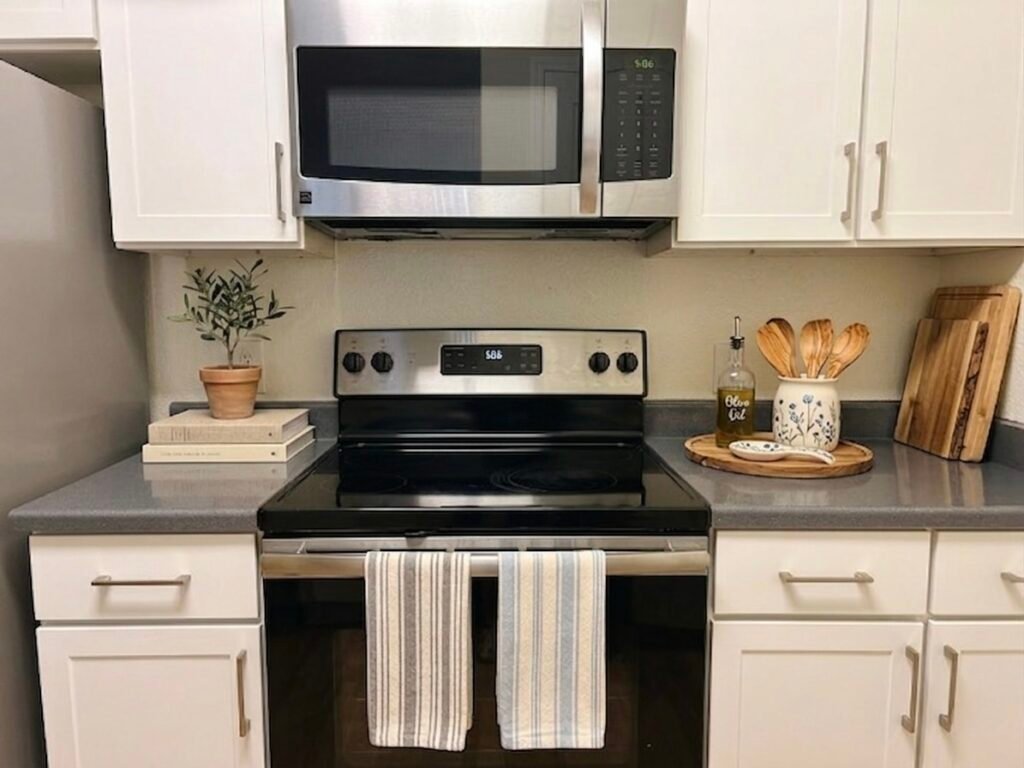
Looking for habits to stay organized that you’ll actually keep? These simple, real-life routines take just minutes a day but completely transform your home.
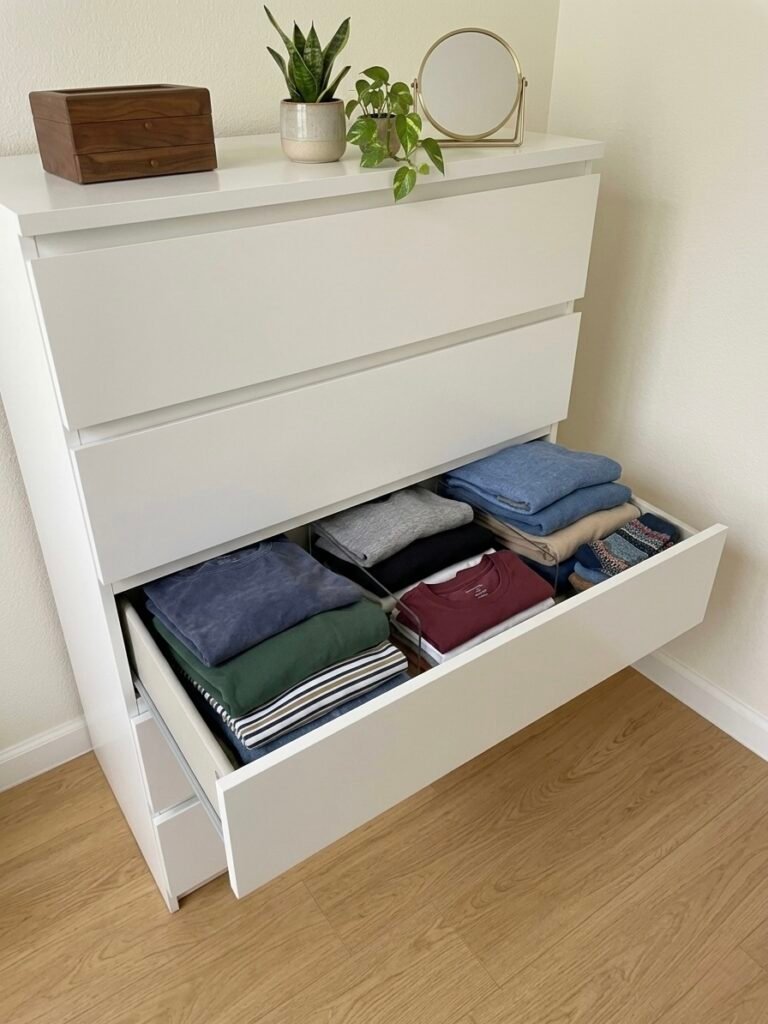
When I was growing up, I watched my grandmother move through her home with a gentle, quiet rhythm that seemed unique to her. She never rushed or spent her Saturdays doing big cleaning projects. Instead, she kept things organized with small habits built into her day. She would fold and put away a pile of freshly dried clothes before anyone even noticed they were ready. After meals, she finished the dishes, wiped the counters, dried her hands, and only then would she sit down. Whenever she picked something up, she always put it right back where it belonged, every time, without a second thought.
As a child, I didn’t fully appreciate what I was watching. It just seemed like something grandmothers did. But as I got older — and started living in my own space — I began to understand what made her home feel the way it did. It wasn’t that she had less stuff, or more time, or some special talent for tidiness. It was that the habits were so deeply ingrained that keeping her home organized never felt like an effort. It simply was how things were done.
That’s the lesson I’ve carried with me, and it’s the one I want to share with you today. Staying on top of your home doesn’t have to feel like a constant battle or a never-ending to-do list. It comes down to building a handful of daily habits to stay organized — small, intentional actions that become so natural over time that you stop thinking of them as chores at all. In this post, I’ve grouped them by category so you can pick up where it makes the most sense for you and build from there.
Let’s get into it.
This post contains affiliate links. As an Amazon Associate, I earn from qualifying purchases.
For more information, see my disclosures here.
Category 1: The “Everything Has a Home” System
This is the foundation that makes every other organizing habit easier. Before anything else, you need a system where every item in your home has a designated spot — and the rule is simple: when you’re done using something, it goes straight back to its home.
Habit 1: Return Items to Their Designated Spot — Every Single Time
Your scissors always live in the third drawer. Your charger always sits on the nightstand. Your reusable bags always hang by the back door. Sounds obvious, right? But the reason so many homes feel messy isn’t because people don’t know where things should go — it’s because they put things down almost where they belong and tell themselves they’ll move it later. Later never comes.
The fix is making the return journey as automatic as the pick-up. The moment you’re done using something, return it. Not after dinner. Not when you get a moment. Right now.
Real-life examples of this in action:
- After using the scissors to open a parcel, walk them straight back to the drawer before you even look at what’s inside the box.
- After charging your phone overnight, put the charger back in its spot on the nightstand rather than leaving it trailing across the bed.
- After using the TV remote, set it back in its tray on the coffee table instead of tucking it into the couch cushions.
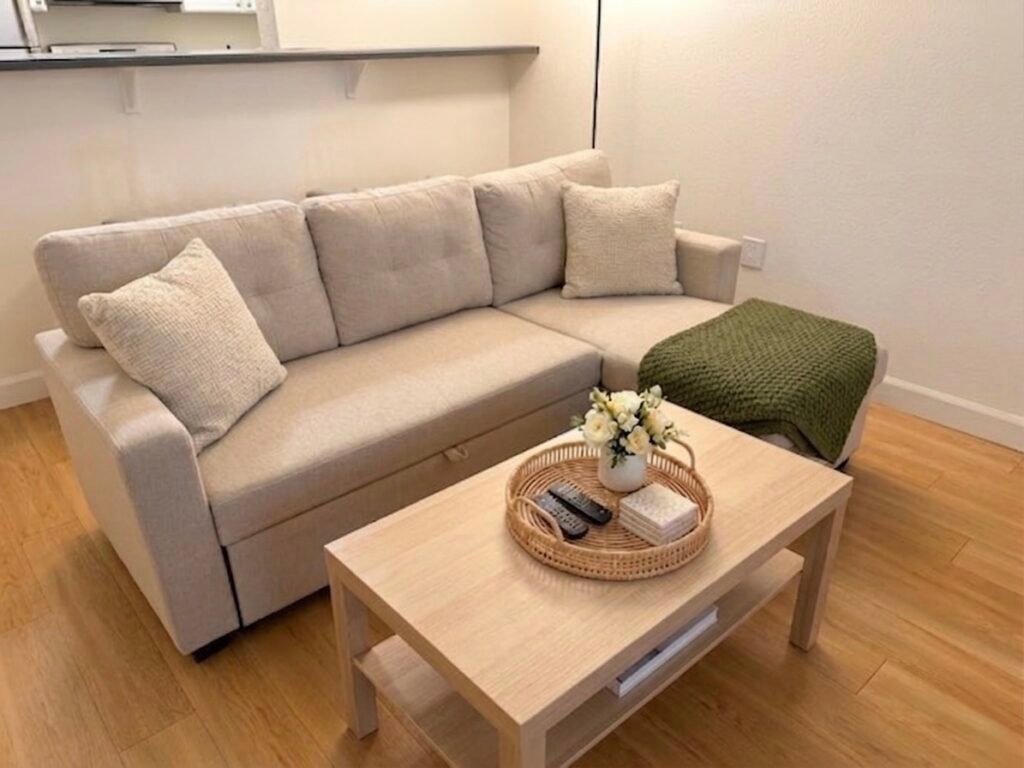
A few products that make building this system so much easier:
- Over-the-Door Hooks — perfect for bags, coats, and everyday items near the entryway.
- Drawer Organizer Inserts — so every item actually has a distinct slot to return to.
- Catch-all Bowl — for surfaces where things tend to accumulate, like the kitchen counter or entryway table.
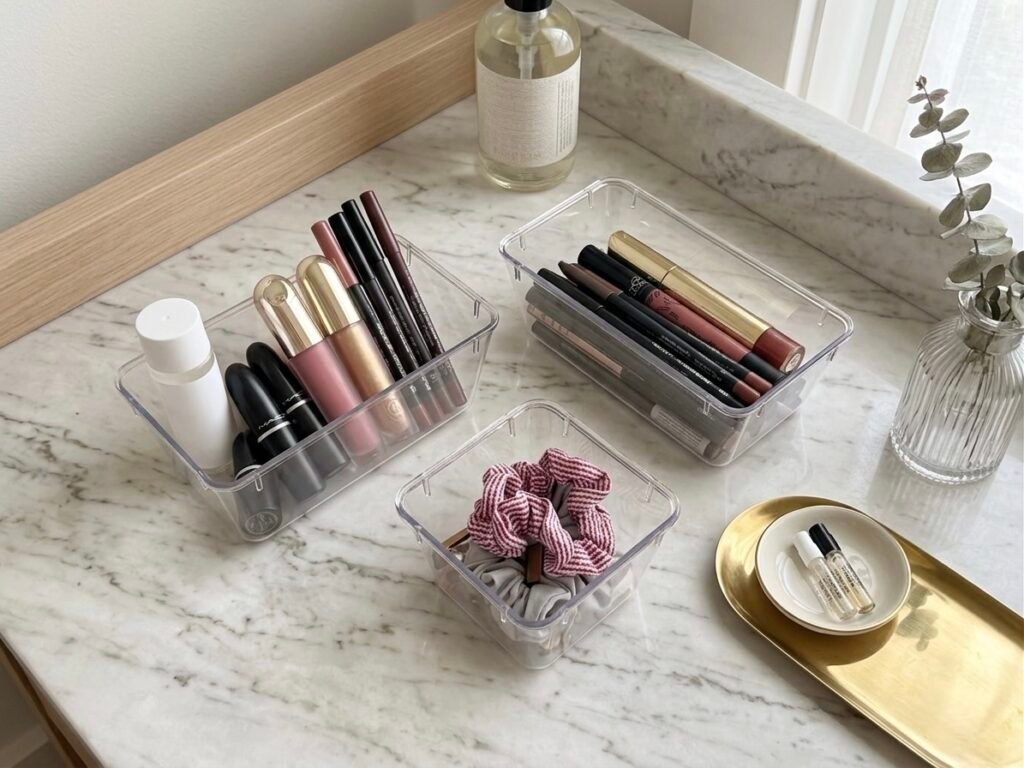
Once you nail this habit, you’ll notice something almost magical: you stop losing things. And that alone saves you more time and mental energy than you’d believe.
Habit 2: Deal With Your Bag Daily
Your bag goes everywhere with you, which means it also collects everything — receipts, wrappers, lip balm that’s been missing since last week, a pen that doesn’t work, and approximately forty loyalty cards you never use. If you don’t clear it out regularly, it becomes a portable clutter magnet.
Get into the habit of doing a two-minute bag sort at the end of each day. Pull out the rubbish, return any items to their homes (yes, the lip balm has a home now), and make sure your bag is set up and ready for tomorrow.
Real-life examples:
- While you’re winding down before bed, tip your bag out on the bed, toss the receipts and wrappers, and reload only what you actually need for tomorrow.
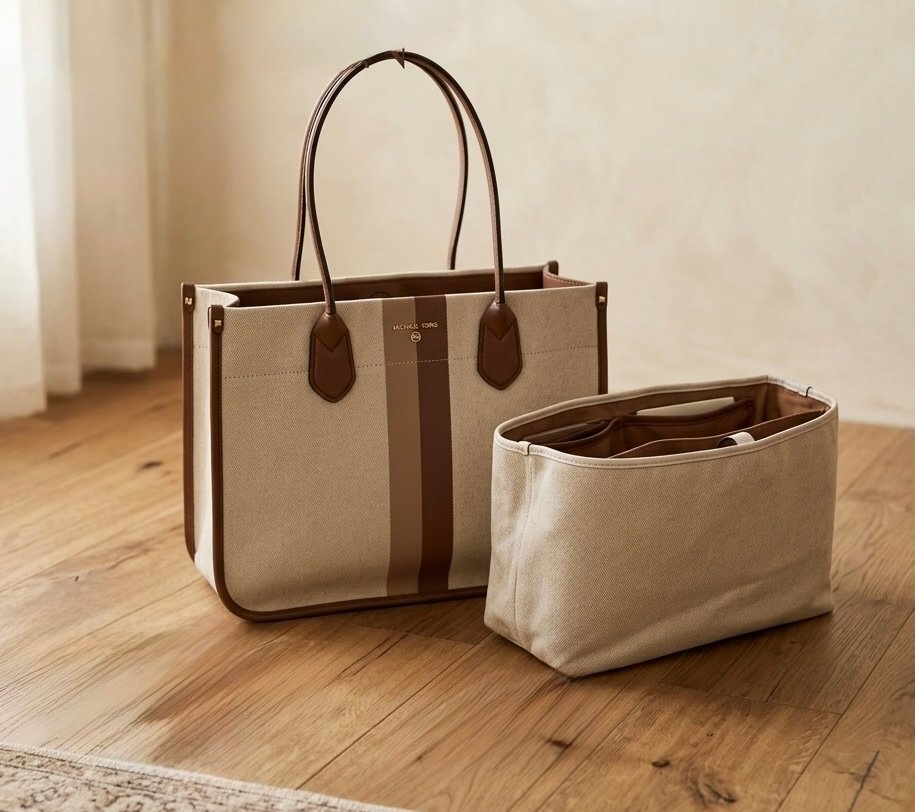
- Keep a Small Makeup Bag inside your bag for essentials like lip balm, hand cream, and headphones — so they always go back to the same spot and never get lost at the bottom.
- A Bag Organizer Insert is a brilliant investment here. It gives everything its own pocket, makes it easy to switch bags, and means your bag never becomes a clutter emergency.
Category 2: Clothes and Laundry Habits That Actually Stick
Clothes are one of the fastest routes to a home that feels chaotic. Tackle them with intention and this whole category becomes almost effortless.
Habit 3: Fold and Put Clothes Away Immediately — No More “Chair Piles”
We need to talk about the chair. You know the one. Every bedroom seems to have a chair — or a corner, or an edge of the bed — that quietly becomes the resting place for every pair of jeans, every shirt, and every “I’ll deal with this later” item of clothing. Before long, the chair becomes invisible furniture, and the pile becomes its own kind of stressful background noise.
The habit to build: fold and put clothes away the moment you take them off or bring them in from the laundry. If something is clean and can be worn again, it goes back on a hanger or is neatly folded on a shelf. If it’s dirty, it goes directly into the hamper — not the floor, not the chair, the hamper.
Real-life examples:
- You get home from work, change out of your work clothes, and immediately hang your trousers and blouse back up rather than draping them over the chair.
- After the dryer beeps, you fold everything on the spot and carry it straight to the relevant drawer or wardrobe section — the laundry cycle isn’t finished until it’s put away.
- Jeans you’ve worn once? Fold them and put them back in the drawer or on a designated shelf rather than leaving them on the floor “just for tonight.”
Products that make this habit stick:
- A stylish Laundry Hamper with a Lid — so dirty clothes are out of sight the moment they come off.
- Velvet Hangers — they keep clothes from slipping and make your wardrobe look so much neater, which genuinely motivates you to hang things up.
- Drawer Dividers for clothing — so folding and storing feel satisfying rather than like a chore.
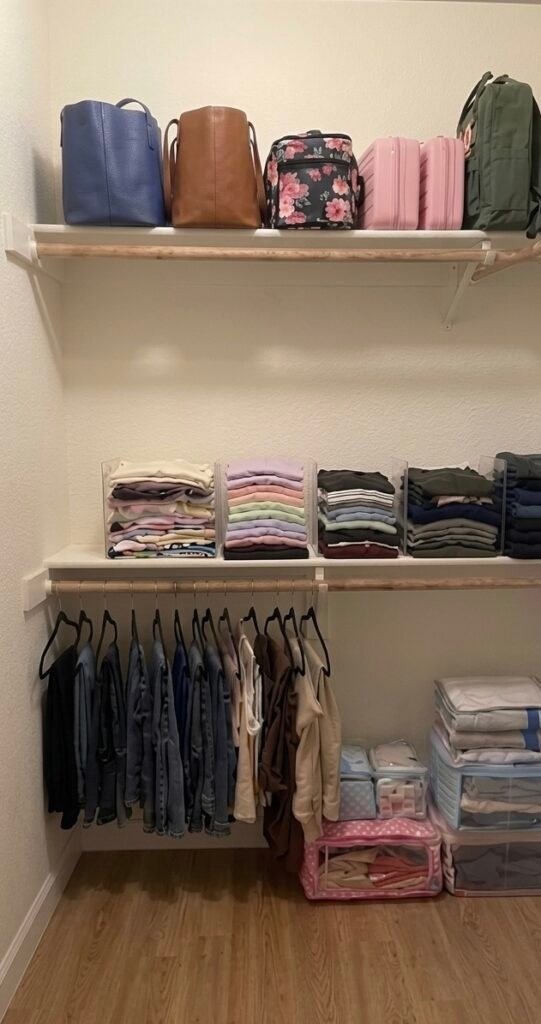
A tidy bedroom changes the whole energy of your home. Once clothes stop piling up, you’ll wonder how you ever lived with the chair pile.
Related Reading: 7 Small Closet Organization Hacks for Renters
Category 3: The “Finish What You Start” Mindset
This category is about one of the most powerful — and most overlooked — organizing principles: completing tasks fully before moving on. Half-finished tasks are the main reason homes feel perpetually untidy even when you’ve been “tidying” all day.
Habit 4: Close the Loop on Every Task You Begin
Here’s what half-finished tasks look like in real life: you start washing the dishes, get a text, wander off, and the dishes sit half-done while the counters stay un-wiped and the kitchen looks worse than when you started. Or you fold the laundry beautifully but leave the pile on the bed “to put away later” — and it’s still there at 11pm when you’re trying to sleep.
The habit is this: once you start a task, see it all the way through before moving on to anything else. The job isn’t done until it’s done done.
Real-life examples of closing the loop:
- After a meal, wash the dishes, dry them, put them away, and wipe down the cooking surfaces and dining table. The kitchen isn’t finished until the surfaces are clear — not halfway.
- After doing laundry, the cycle ends when clothes are folded and put back in their drawers or hung in the wardrobe. Folded on the bed doesn’t count as done.
- After game night, every card, every piece, every dice goes back in the box and the box goes back on the shelf before anyone goes to bed. In the future, you will be so grateful.
- After a hobby or project, whether you’ve been painting, crafting, wrapping gifts, or doing a puzzle — tidy your workspace before you walk away, even if you’re coming back to it tomorrow.
- After cooking, put ingredients back in the fridge or pantry as you go, rather than leaving everything out until after you’ve eaten.
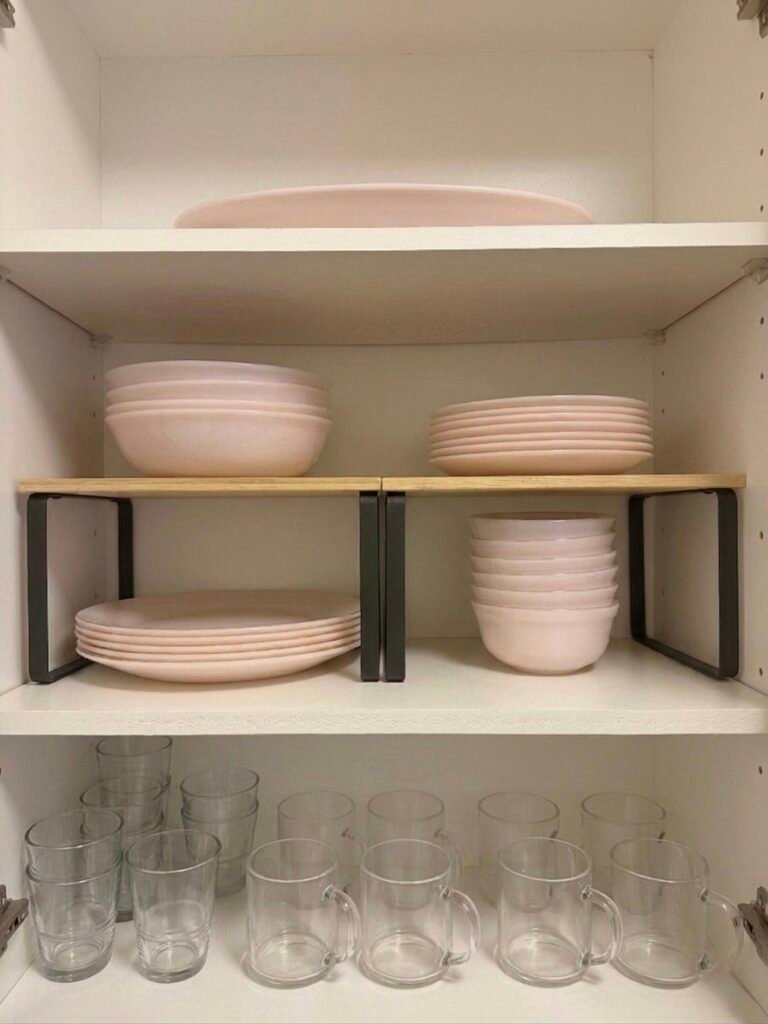
This habit works because it breaks the cycle of accumulation. When tasks compound on top of each other in a half-finished state, the mess — and the mental load — snowballs quickly. But when you consistently close the loop, your home naturally resets itself throughout the day without any grand effort.
Category 4: Managing Paper and Admin Clutter
Paper clutter is one of the sneakiest and most stressful forms of mess, because it builds up quietly and then suddenly feels completely unmanageable.
Habit 5: Open Your Mail and Action It the Same Day
The rule is simple: open your mail the day it arrives and deal with it immediately. Don’t let it sit. Don’t make a pile. Don’t tell yourself you’ll do it at the weekend.
Real-life examples:
- Bills: open, scan, and either pay on the spot or file in a designated folder.
- Junk mail: straight into the recycling bin before it even makes it to the kitchen counter.
- School letters or important documents: into their labelled folder immediately, not left on the dining table where they’ll be buried under tomorrow’s post.
- Delivery receipts and packaging slips: keep only what you might need for a return; recycle the rest right away.
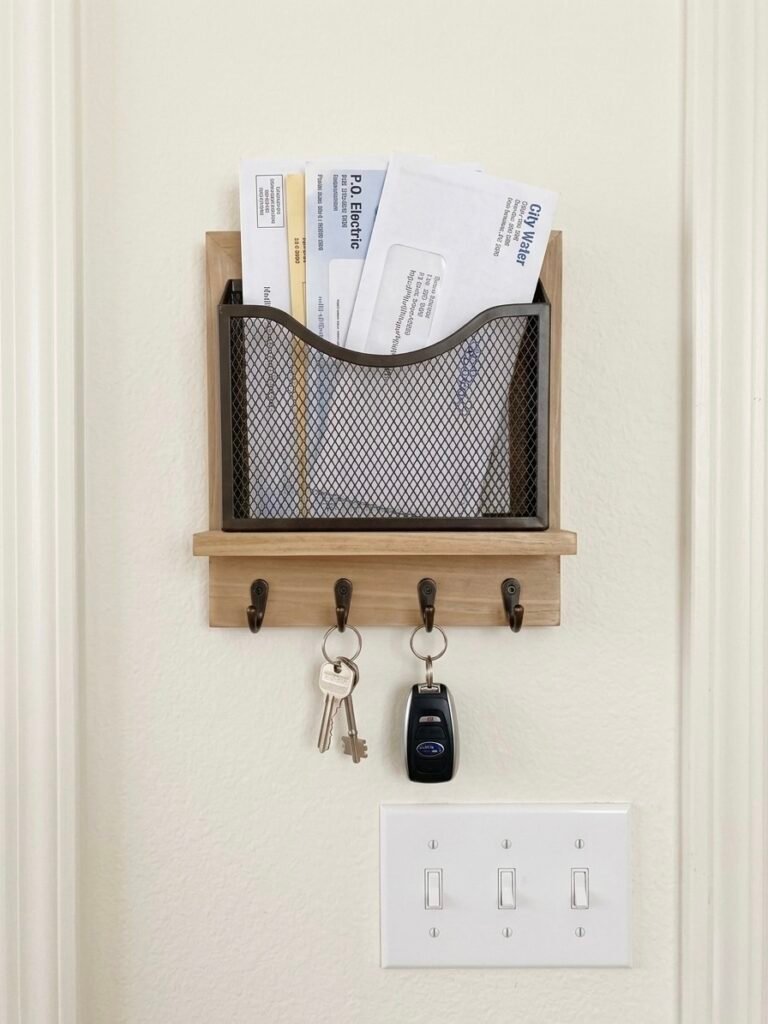
A Wall-Mounted Mail Organizer near your front door or in the kitchen is a total game-changer here. When there’s a logical, easy place to sort things as they come in, you’ll actually do it — and the paper pile never gets a chance to start.
Want to build an even more complete daily routine around your home? Check out my post on 10 Daily Habits for a Perfectly Organized Home — it covers everything from your morning start to your evening wind-down, with tips for every room in the house!
Category 5: Smarter Habits for the Week Ahead
These habits zoom out a little from the daily rhythm and help you set yourself up so the whole week feels more manageable — not just one day at a time.
Habit 6: Do a Short Weekly Walk-Through to Catch What Slipped
Daily habits keep your home in great shape, but life is busy and sometimes things slip. A quick ten-to-fifteen minute weekly walk-through — maybe on a Sunday evening or a Friday morning — acts as your safety net. It catches anything that’s drifted out of place during the week and brings everything back to baseline.
Real-life examples:
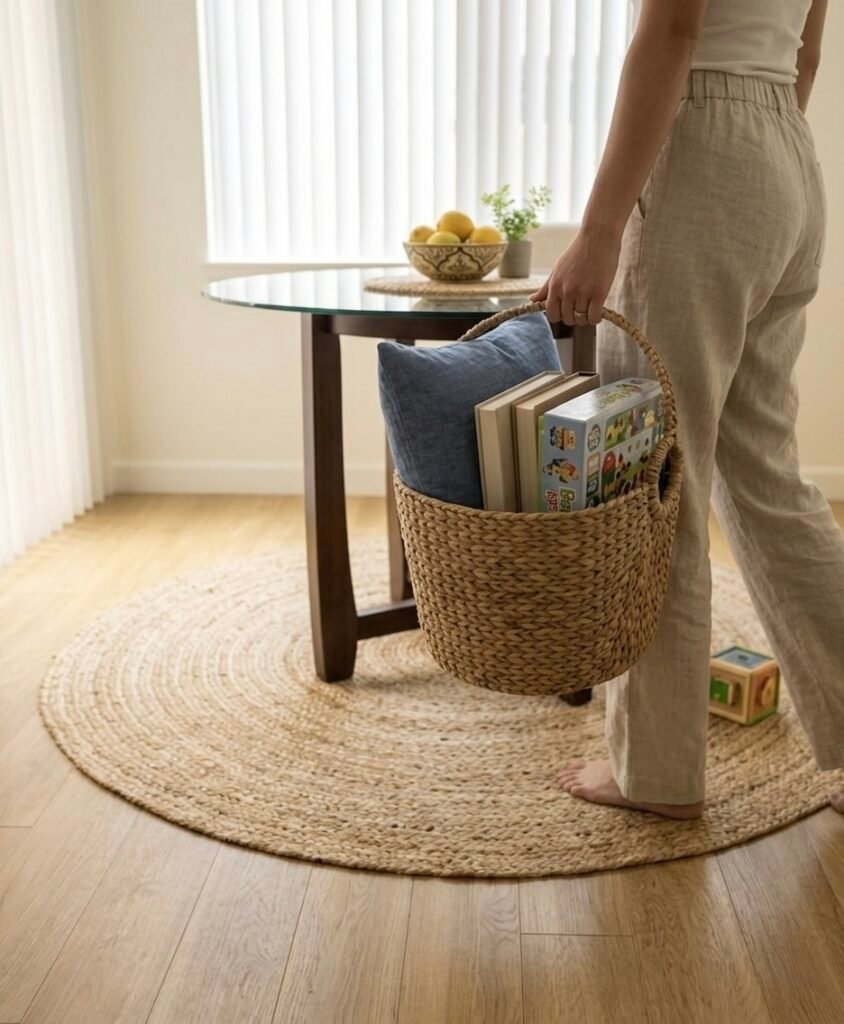
- Walk through each room with a Small Basket, collecting anything that’s found its way somewhere it doesn’t belong, and return everything to its home in one loop.
- Check your surfaces — coffee table, bathroom shelf, entryway — and clear anything that’s accumulated.
- Use this time to wipe down any spots that need a quick refresh, like the bathroom counter or the top of the microwave.
- Think of this weekly reset less as a cleaning task and more as a maintenance check — a quick audit that ensures your daily habits haven’t slipped without you noticing.
Habit 7: Anchor New Habits to Things You Already Do
One of the most effective ways to make organizing habits stick is to attach them to something you already do automatically — a technique called habit stacking. You don’t have to find extra time in your day; you just use the transitions that already exist.
Real-life examples of habit stacking:
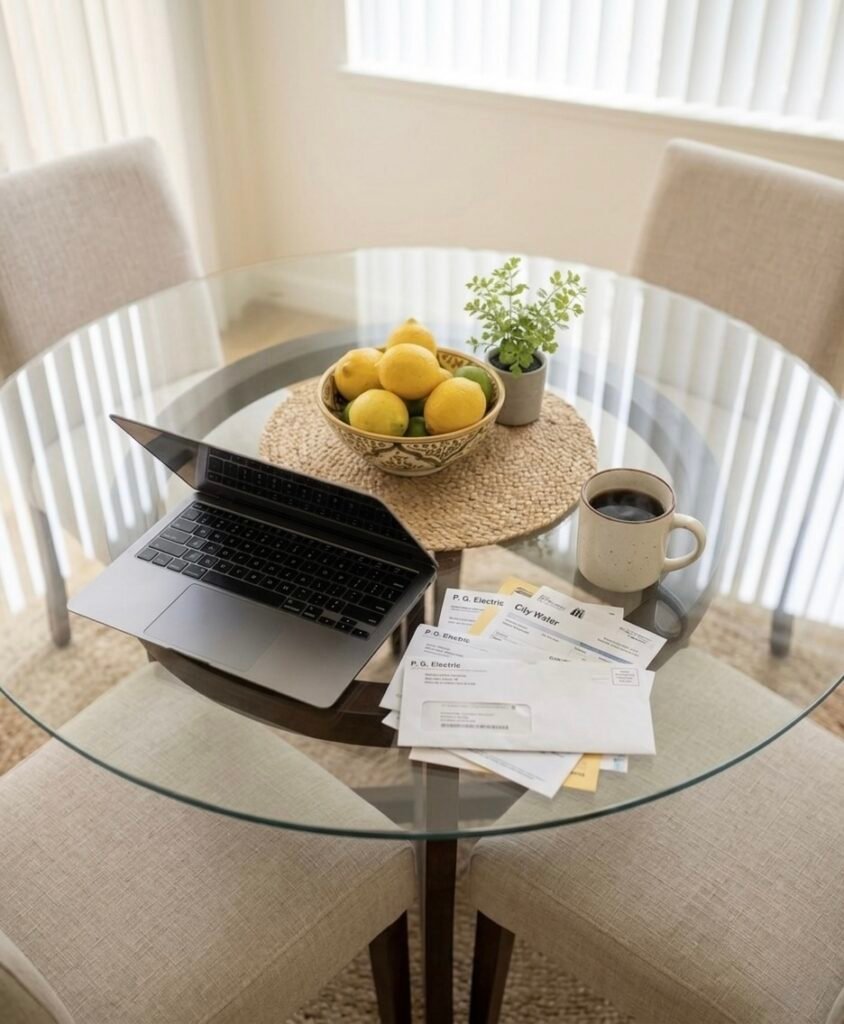
- While the coffee brews in the morning → sort through yesterday’s post and put it in its place.
- While waiting for the shower to warm up → put away anything left on the bathroom counter.
- After putting the kids to bed → do a two-minute tidy of the living room before you sit down.
- Every time you walk out of a room → glance back and take one thing with you that doesn’t belong there.
The power of habit stacking is that it makes new habits feel nearly effortless because they’re attached to existing triggers. Instead of trying to remember to “be more organized,” you’re simply adding a small action to something you already do.
Bonus Tips: Make Organization Work For You
- Set a Timer and Make It a Game: It sounds almost too simple, but setting a five or ten-minute timer for tidying tasks makes them feel manageable — and even a little fun. When you know there’s an endpoint, you’re so much more likely to start. Try racing the timer and see how much you can get done. You’ll be surprised.
- Make Your Storage Look Good: When your storage solutions are beautiful, you’re genuinely more motivated to use them. Invest in matching baskets, labelled bins, and drawer organizers that you enjoy looking at. Organizing your home should feel like an act of care for yourself and your space — not a chore you resent.
- Get the Whole Household Involved: Habits are so much easier to maintain when everyone in the house follows the same systems. Talk to your partner, your kids, or your housemates about where things live and why returning items matters. When the whole household is on the same page, the system runs itself — and you’re not the only one carrying it.
- Consistency Over Perfection, Always: Some days you’ll breeze through every habit without thinking. Other days, life gets loud and you manage one or two. That’s completely fine. The goal is not a perfectly pristine home every single day — it’s a home that’s generally calm, functional, and easy to reset when things do get a little messy. Consistent effort over time is what builds a genuinely organized life.
Final Thoughts
The most organized homes aren’t run by people who are naturally tidy or who have endless time to clean. They’re run by people who’ve built small, intentional habits into their everyday life — habits that quietly prevent mess from building up in the first place.
Give everything a home and return it there without exception. Deal with your clothes the moment you take them off. Finish every task completely before moving on. Open your mail and act on it the same day. Stack new habits onto the things you already do. And once a week, take a few minutes to reset whatever slipped through the cracks.
Do these things consistently, and I promise you — your home will feel genuinely different. Calmer, cleaner, and so much easier to live in. And that feeling? It’s one hundred percent worth the few extra minutes it takes.
Start with just one category this week and build from there. You don’t have to do it all at once — every small step matters, and I’m cheering you on every single one of them.
Which category are you starting with: the “everything has a home” system, the laundry habits, or something else? Let me know in the comments!