Master your kitchen cabinet and drawer organization with these tips. Learn how to store spices, use glass jars, and organize pans for a stress-free home.
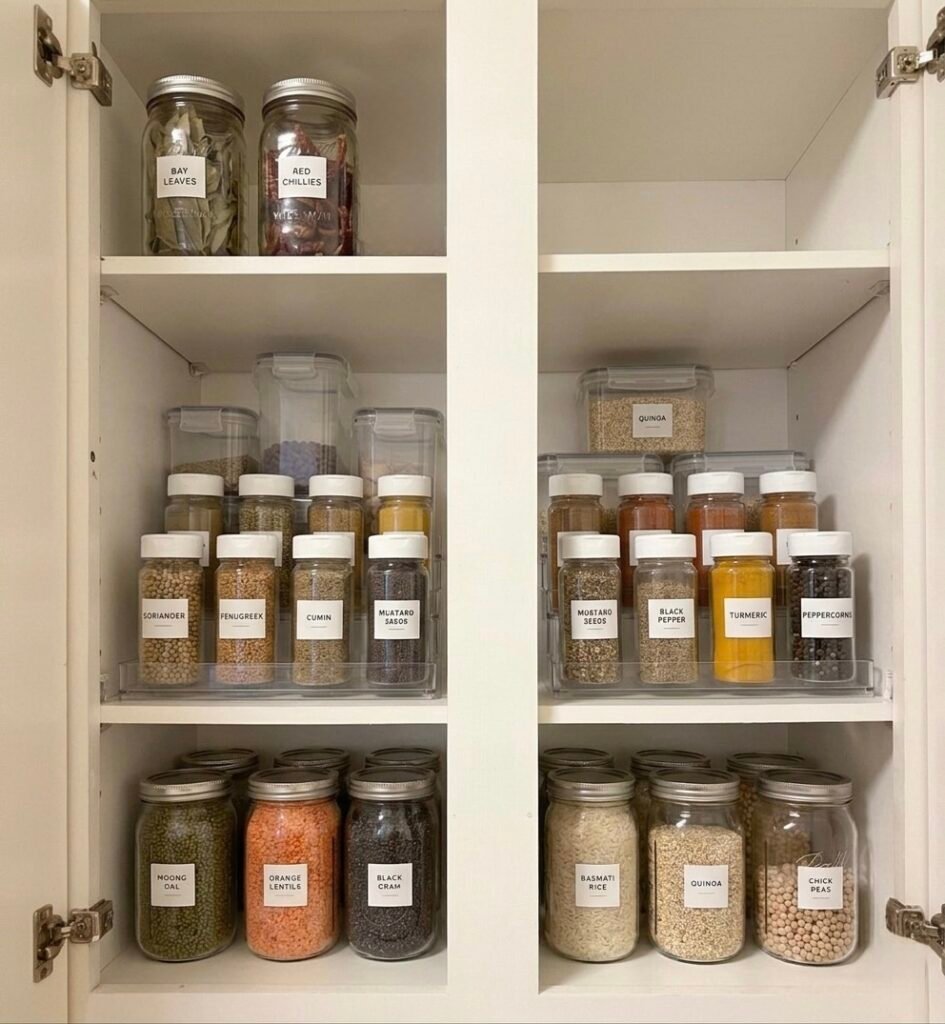
If there is one room in my home where I truly spend the most time, it’s the kitchen. I absolutely love cooking and am constantly trying out new recipes—whether it’s a traditional family dish or something experimental I found online. Because my kitchen is always being used, it can easily turn into a chaotic mess if I’m not careful. I’ve realized that to keep my passion for cooking alive, I need to keep the space organized and neat. There is nothing more frustrating than having a pot boiling over while you’re frantically searching through every single drawer just to find a specific measuring spoon or a particular spice! By creating a dedicated home for every item, I’ve made my cooking sessions much more peaceful and efficient.
Let’s dive into how I keep my kitchen organized.
This post contains affiliate links. As an Amazon Associate, I earn from qualifying purchases.
For more information, see my disclosures here.
1. The Glass and Plastic Jar System for Grains and Masalas
In my house, we always have a huge variety of lentils, grains, and pulses. Instead of keeping them in the plastic bags they come in, I’ve switched to a uniform container system. It looks so much cleaner, and you can see exactly when you’re running low.
I love using glass for the pantry, but prefer plastic jars for spices stored in the fridge to prevent breakage and keep them fresh. To help you select the correct jar size for your staples, here’s the measurement system I follow.
- Small Spices (50g / 1.7 oz): These fit perfectly in 100 ml (3.4 oz) plastic bottles.
- Chilled Masalas (100g / 3.5 oz): I use 200 ml (6.8 oz) plastic bottles for these. Since I store these in the refrigerator to keep them fresh, plastic is much easier and safer to handle!
- Grains and Pulses (500g / 1.1 lbs): Use 1000 ml (32 oz / 1 quart) glass jars.
- Medium Batches (1kg / 2.2 lbs): I use 1500 ml (64 oz / 1.5 L) glass jars.
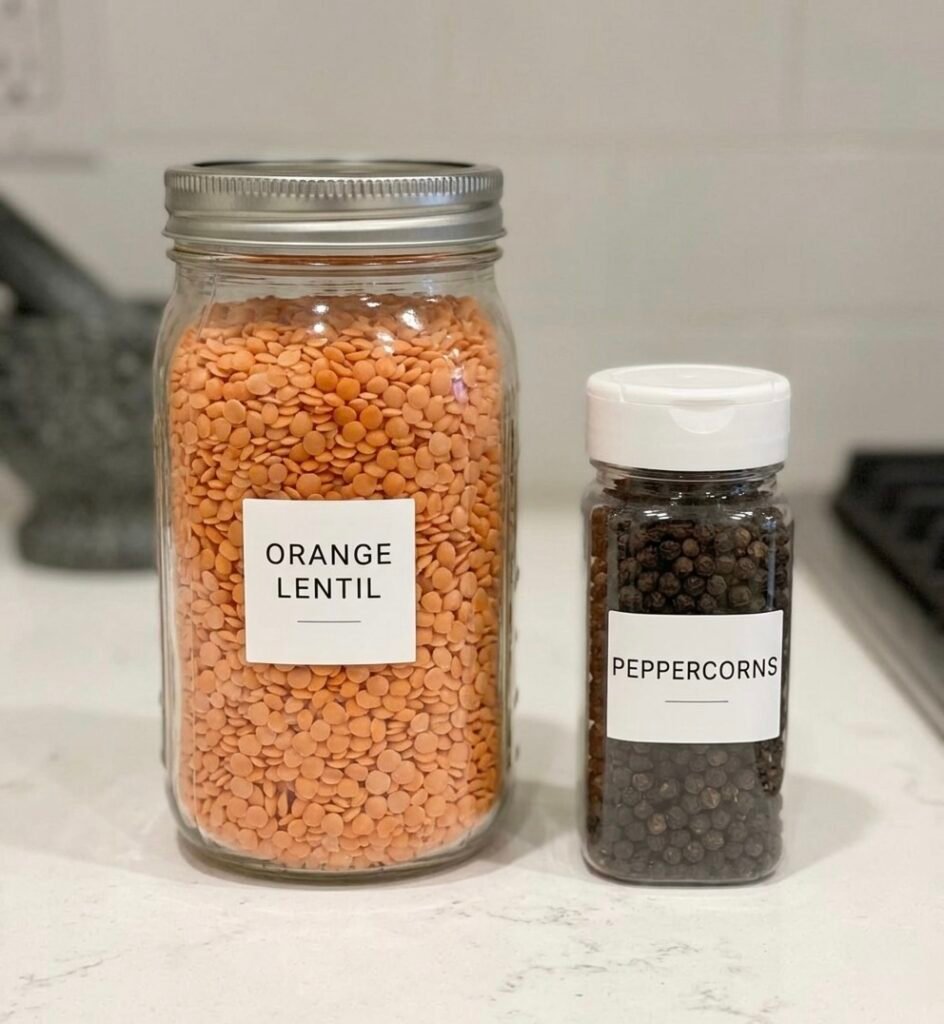
For my everyday grains and pulses, I use 32-oz glass Mason jars. These are the “magic size” for standard grocery hauls because they comfortably hold exactly 1 lb (about 500g) of lentils or beans. It fills the jar almost to the top, leaving just enough space to close the lid securely without having to cram things in. Using glass for these bulkier items keeps them fresh, pest-free, and looks beautiful on a pantry shelf. I prefer using clear plastic bottles for spices. Since whole spices like peppercorns, cloves, or cardamom are often used in smaller quantities (around 100g or 3.5 oz), these lightweight bottles are much easier to grab and shake directly into a pot.
2. Bulk Storage for Rice and Flour
For the items we use in bulk, like rice and flour, I prefer larger containers. A great rule of thumb is to use a 15 lb container for 10 lbs of flour or rice. Having that extra space at the top makes it so much easier to scoop out what you need without the contents spilling over the sides.
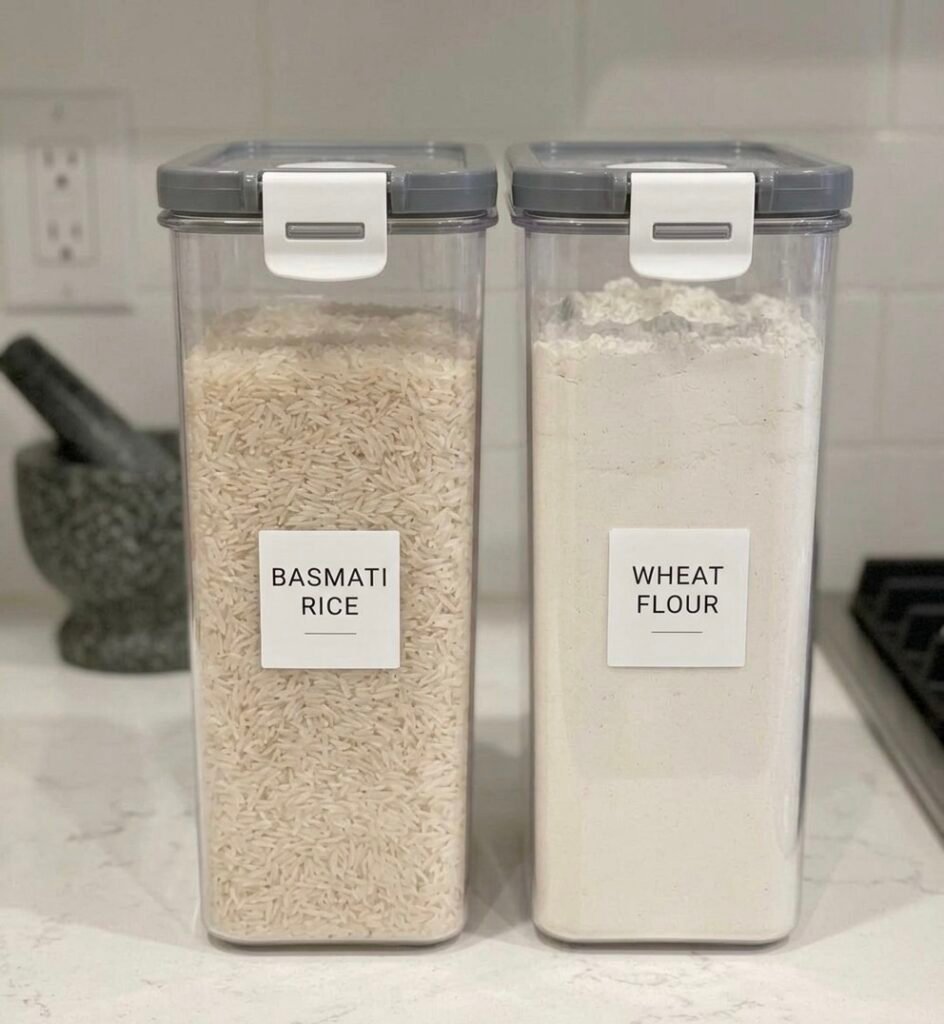
Pro Tip: If you love the clear look, check out these 5 Acrylic Organizers for the Kitchen to help streamline your shelves!
3. Tame Your Utensils and Drawers
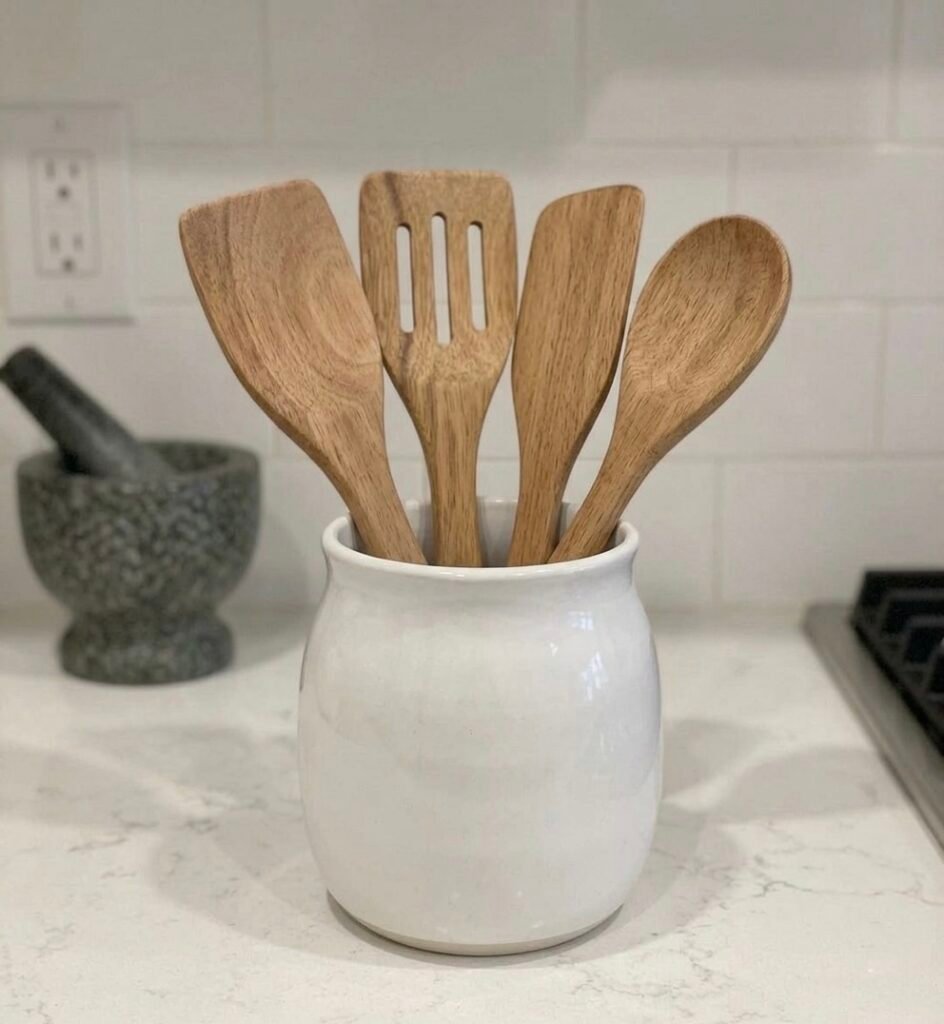
Drawers can quickly become a “black hole” for small tools. I recommend using these bamboo organizers to keep your spatulas, spoons, and forks neatly separated. However, I don’t keep everything tucked away. I use one beautiful ceramic utensil crock organizer on the kitchen countertop specifically for my “daily drivers”—the spatulas I use every single time I cook. Everything else stays tucked neatly in the drawers to keep the counters from looking cluttered.
4. Group Like with Like
Efficiency is all about “zones.” I store all my baking essentials together in one spot and keep my oven mitts right nearby. When you group items by activity, you avoid hunting for individual pieces across the kitchen while you’re in the middle of a recipe.
Related Post: You don’t need to spend a lot of money to get organized! Read more on Smart Kitchen Organization Tips to make maximum utilisation of things you already have without spending a dime.
5. The Case for Wooden Cutting Boards
I always choose wooden cutting boards over plastic ones. Beyond the fact that they look beautiful and timeless on your counter, they are much better for your knives. Plastic boards can develop deep grooves that trap bacteria, whereas high-quality wood has natural antimicrobial properties. Plus, a sturdy wooden board can last a lifetime if you take care of it!
6. Keep Your Masalas Within Reach
Since we use our masala box (Spice Box) every single day, it has a permanent home within arm’s reach of the stove. Don’t hide your most-used ingredients at the back of a cabinet. If you use it daily, it deserves a “prime real estate” spot on your counter or in the very front of your spice drawer.
7. Maximize Vertical Space
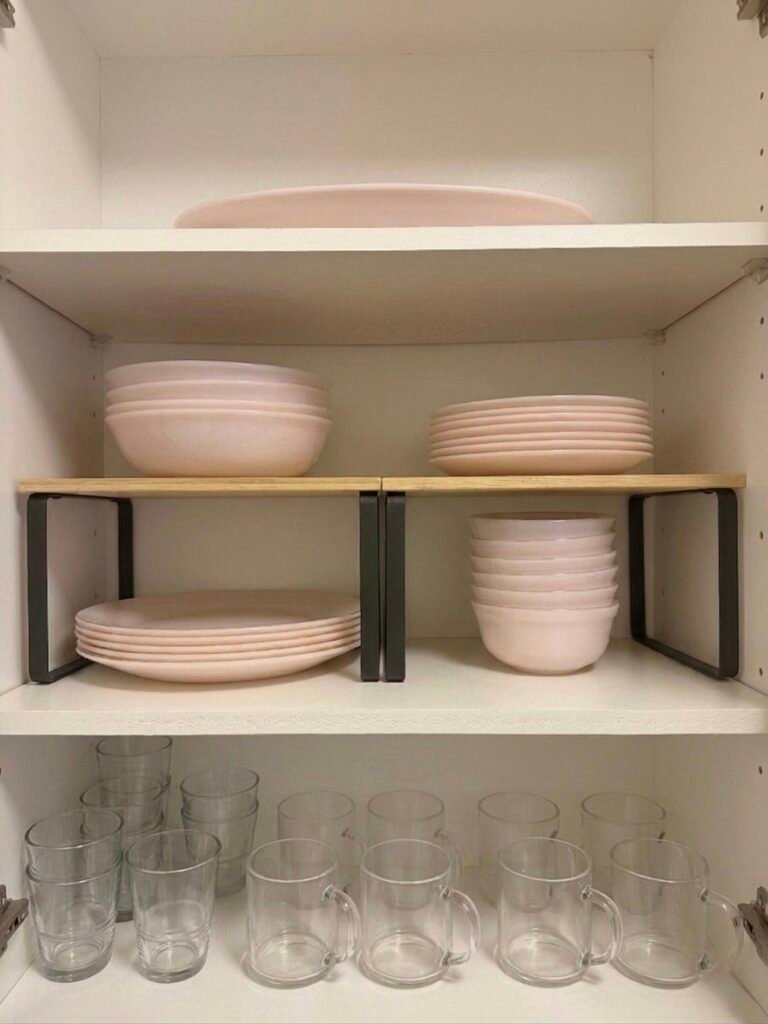
To keep my chinaware and plates neat, I swear by shelf risers. Instead of stacking different-sized plates on top of each other (which makes getting the bottom one a nightmare), risers let you create a second level of storage. It’s an instant way to add more space to any cabinet.
8. Mastering Heavy Pots and Pans
Utensils like woks and fry pans are bulky and awkward. I use this pots and pans organizer rack that allows pans to sit vertically or on individual tiers. This prevents scratching and makes it so much easier to grab the exact pan you need. This can also hold the lids perfectly in one place, so there is no need to go digging for the matching lids inside the cabinets.
Small Space Hack: If you’re struggling with a tiny kitchen, you have to see my secret to Hybrid Pantry Organization.
Additional Tips for Your Kitchen
- Label Everything: Especially with various grains and flours, a simple label maker helps everyone in the house know exactly where things go.
- Decant Regularly: Whenever you come home from the grocery store, take five minutes to pour your grains into your glass jars. It prevents the “bag pile-up” from ever starting.
- Check Expiration Dates: Once every three months, do a quick “pantry sweep” to ensure your spices and grains are still fresh.
- The “Eye-Level” Rule: Store the items you use least often (like that heavy festive platter) on the very top shelves, and keep your daily essentials at eye level.
Conclusion
Kitchen cabinet and drawer organization doesn’t have to happen all in one day. Start with the area that frustrates you the most—maybe it’s the spice drawer or the Tupperware cabinet—and go from there. By using the right sized jars and grouping your items by how you actually cook, you’ll find that spending time in the kitchen becomes a much more joyful, creative experience. I hope these tips help you create a kitchen that is as functional as it is beautiful!
Which spot in your kitchen frustrates you the most: the spice drawer, the Tupperware cabinet, or something else entirely? Drop a comment and let me know where you’re starting!